
UConn Health
Healthcare / Public Health / Community Advocacy
FourteenG partnered with UConn Health’s Health Disparities Institute to help launch and position the Equal Coverage to Care Coalition, a statewide initiative focused on improving health insurance literacy, navigation, and access for underserved communities across Connecticut.
Case Study Menu:

01
Understanding The Challenge
UConn Health’s Health Disparities Institute was leading a statewide effort to address the growing complexity of health insurance literacy, healthcare navigation, and access to care for underserved populations throughout Connecticut. The initiative sought to bring together healthcare organizations, navigators, advocates, policymakers, and community stakeholders under a unified coalition focused on reducing barriers to care.
The challenge was not simply awareness. The coalition needed a clear identity, a structured communications system, and educational materials capable of simplifying highly complex healthcare concepts for diverse audiences. At the same time, the initiative needed to establish credibility, unify stakeholders, and create a framework capable of supporting long-term statewide collaboration.
FourteenG was brought in to help shape the coalition’s public-facing identity, messaging, and communications infrastructure during the foundational stages of the initiative.


02
Key Objectives
To support the launch of the coalition, FourteenG helped build a clear communications and branding foundation capable of supporting statewide outreach, education, stakeholder alignment, and long-term public engagement.
- Establish a recognizable and trusted coalition identity
- Simplify complex health insurance and navigation concepts
- Create accessible educational and outreach materials
- Support stakeholder engagement and coalition visibility
- Develop communication tools for underserved communities
- Build a scalable foundation for long-term coalition growth
03
Building a More Connected Approach
FourteenG developed a connected brand and communications system designed to support coalition awareness, stakeholder engagement, public education, and long-term health equity outreach efforts.
Strategy & Messaging
Developed the coalition’s messaging framework and communication strategy to help simplify complex healthcare and insurance concepts for public-facing education and outreach.
Brand & Coalition Identity
Created the coalition name, visual identity, logo system, and brand guidelines to establish credibility, consistency, and recognition across organizations and stakeholders.
Educational Materials & Outreach
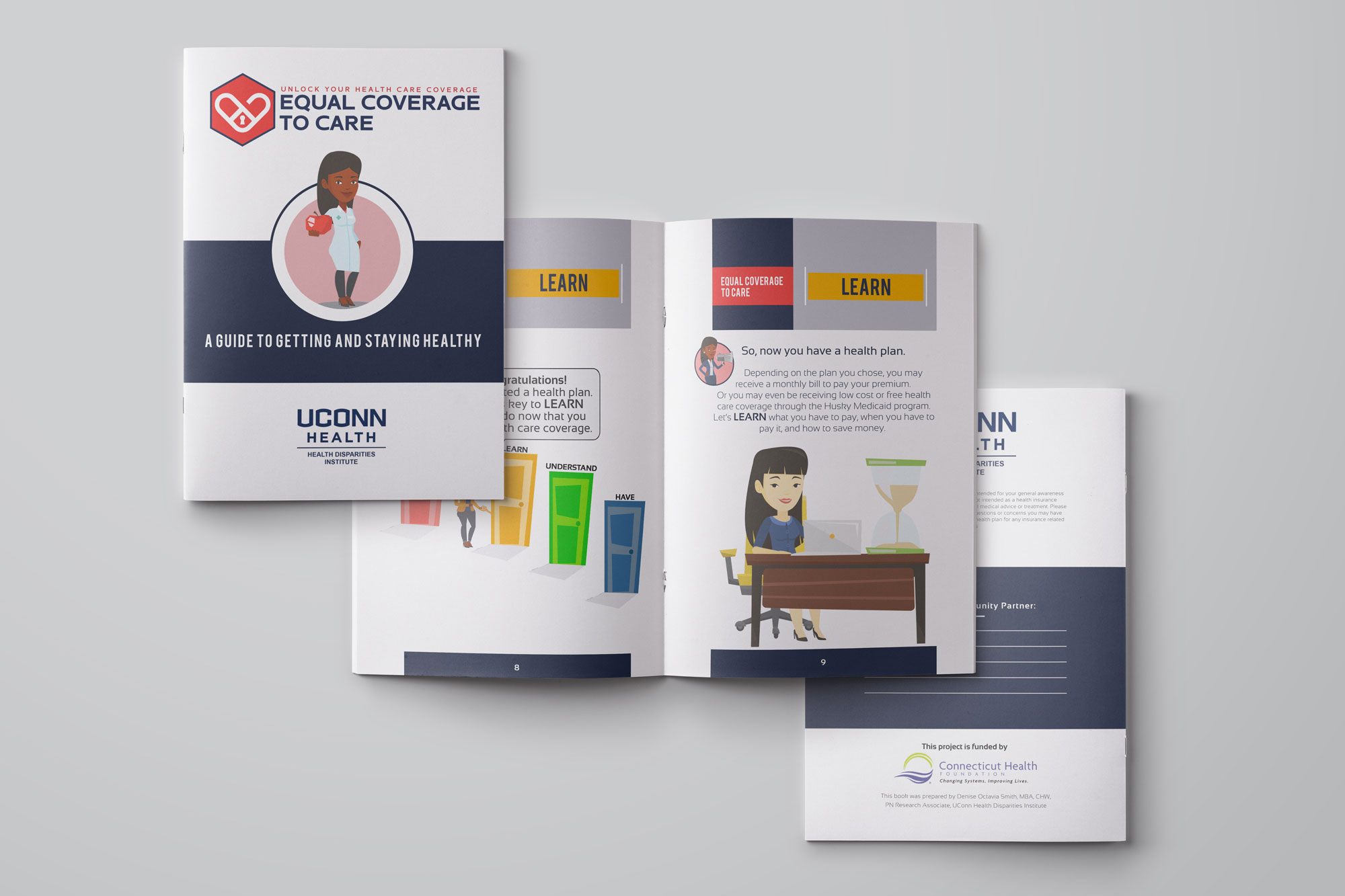
Designed educational workbooks, outreach tools, and communication materials focused on improving access and engagement for underserved communities.
Visibility & Engagement
Supported coalition engagement efforts through recruitment tools, facilitation materials, presentation assets, and digital outreach initiatives including social media infrastructure.

05
Results That Matter
The initiative established a coordinated communications and coalition framework capable of supporting long-term statewide collaboration, health equity outreach, and public education efforts.
Coalition Organizations Aligned
Bringing together healthcare providers, advocates, navigators, and community organizations under a shared statewide initiative.
Educational Materials Distributed
Supporting outreach, workshops, and health insurance literacy efforts across underserved Connecticut communities.
06
Built For Long-Term Growth
The Equal Coverage to Care Coalition required more than creative deliverables. It required the development of a communication and branding system capable of supporting a complex statewide initiative focused on health equity, education, and access to care.
By helping establish the coalition’s identity, outreach infrastructure, and educational communication tools, FourteenG supported the launch of an initiative designed to create long-term impact across Connecticut communities.
The project demonstrated FourteenG’s ability to help organizations communicate complex ideas more clearly, align multiple stakeholders, and build scalable systems around mission-driven initiatives.